
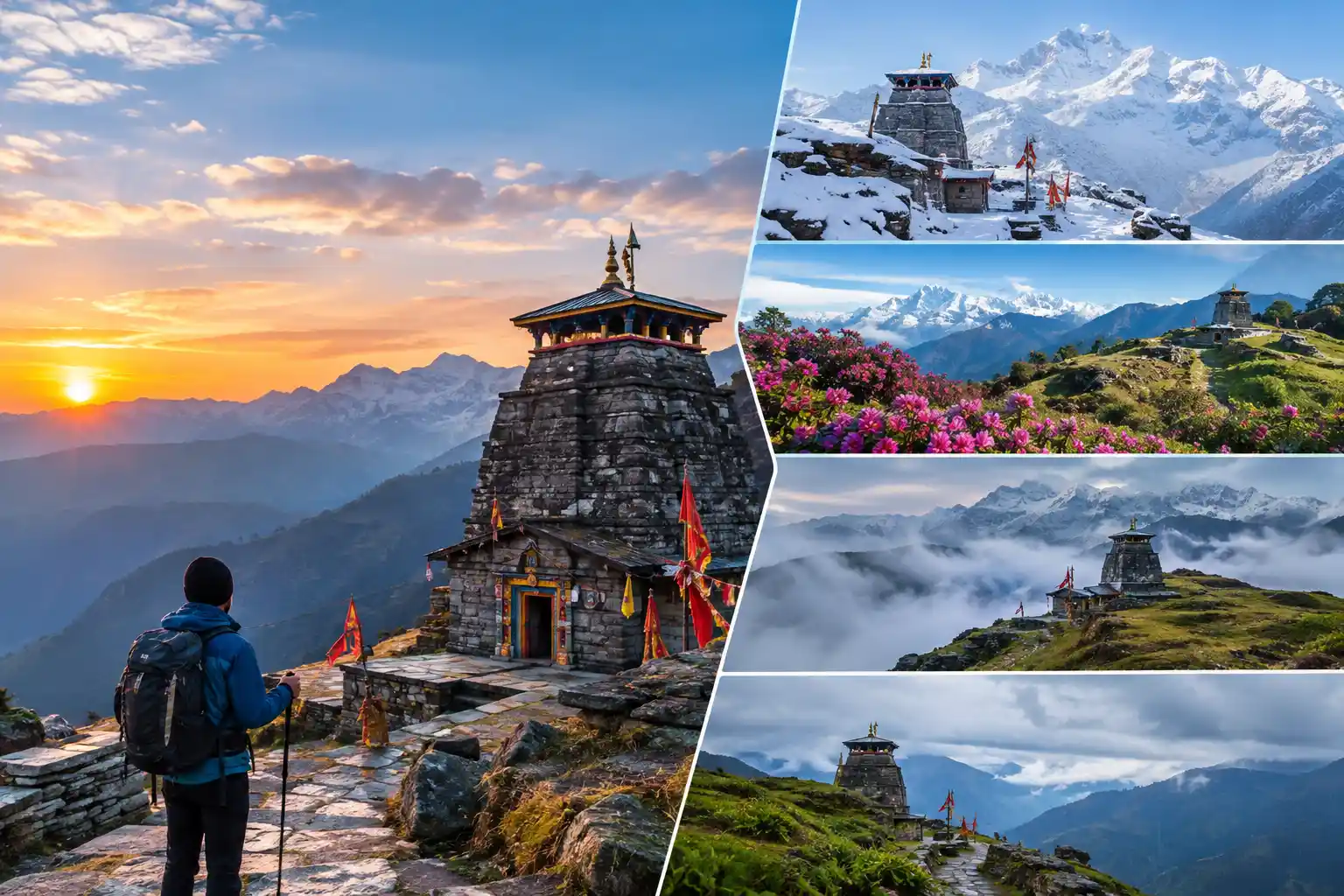
 PahadiRoutes Team
Chopta Tungnath weather stays cool to very cold all year. The most comfortable months are March to June and September to November, when skies are mostly clear and the trail is easy to walk. December to February brings snow and freezing nights, while July and August bring heavy rain, cloud cover and landslide risk. Chopta sits at about 2,680 m and Tungnath at about 3,680 m, so the temperature at the temple is usually 5 to 7°C lower than at the base.
This guide covers Chopta and Tungnath temperature month by month, explains why the two places feel so different, and tells you what to carry in each season. The figures below are typical ranges, not forecasts. Mountain weather can change within hours, so check a current forecast a day or two before you start the chopta tungnath trek.
Chopta and Tungnath Temperature by Month at a Glance
| Month | Chopta (approx. night low to day high) | Tungnath (approx. night low to day high) | What to expect |
| January | -4 to 7°C | -10 to 1°C | Snow, freezing nights |
| February | -3 to 9°C | -9 to 3°C | Snow, some clear spells |
| March | 0 to 13°C | -6 to 7°C | Melting snow, changing weather |
| April | 4 to 18°C | -2 to 12°C | Pleasant days, rhododendrons |
| May | 8 to 22°C | 2 to 16°C | Warm days, cold nights |
| June | 10 to 23°C | 4 to 17°C | Warm, pre-monsoon showers |
| July | 11 to 20°C | 5 to 14°C | Rain, clouds, green slopes |
| August | 11 to 19°C | 5 to 13°C | Heaviest rain, road issues |
| September | 9 to 19°C | 3 to 13°C | Skies start clearing |
| October | 4 to 17°C | -2 to 11°C | Crisp, clear views |
| November | 0 to 13°C | -6 to 7°C | Cold, temple closing |
| December | -3 to 9°C | -9 to 3°C | Snow, very short days |
These numbers are rough guides based on typical seasonal patterns. A clear, sunny afternoon can feel much warmer than the range suggests, and a windy, cloudy morning can feel much colder. Wind chill at higher points like Chandrashila can push the felt temperature well below the actual reading.
What Is the Weather Like in Chopta Through the Year?
Chopta has five broad weather phases. Winter runs from December to February, with snow, low temperatures and short days. Spring, from March to April, is a transition period where snow melts at lower levels while the upper trail stays cold.
May and June are the warmest months, with pleasant days and cold evenings. The monsoon usually arrives in the second half of June and lasts until about mid-September, though the exact timing changes every year. Autumn, from late September to November, gives the clearest skies before the cold sets in again.
Chopta is surrounded by dense forest and open meadows, so mornings are often misty even in good months. Evenings drop in temperature quickly once the sun goes behind the ridges. Even in May, you will want a warm layer after sunset.
Why Is Tungnath Colder Than Chopta?
Tungnath is colder mainly because of altitude. Air temperature generally drops by around 6 to 7°C for every 1,000 m you climb, and Tungnath is roughly 1,000 m above Chopta. The upper trail is also open and exposed, so wind hits harder than it does in the forested parts near the base.
Because the Chopta Tungnath trek distance is only about 3.5 to 4 km one way, many people underestimate how much the conditions change on the way up. You can start in a light jacket at Chopta and be pulling on gloves and a windproof layer within an hour or two. Above the temple, the extra climb to Chandrashila at around 4,000 m is colder and windier again.
Sunlight matters too. The trail is sunny in the morning and often cloudy by afternoon, especially from May onward. That is why most trekkers start early, both for warmth and for clearer views.
Chopta Tungnath Weather Month Wise
Chopta and Tungnath Weather in January
January is usually the coldest month. Chopta nights often fall below freezing, and days stay cold even when the sun is out. The trail to Tungnath is generally covered in snow, and Chandrashila can be very windy.
The Tungnath temple is closed in winter, and worship shifts to Mukunath, its winter seat. Trekking is possible for experienced walkers with proper gear, but snowfall can delay or stop a plan at short notice. Some stays around Chopta run at limited capacity in winter, so confirm arrangements in advance.
Chopta and Tungnath Weather in February
February is still firmly winter. Snow depth on the upper trail is often high, and mornings can leave the stone path icy. On clear days, midday sun can feel pleasant at Chopta, but shade and wind keep it cold.
Towards the end of the month, temperatures start creeping up slightly. This is a good month for people who specifically want a snow trek and are ready for cold, slow-moving days. Micro-spikes and gaiters make a big difference on the trail.
Chopta and Tungnath Weather in March
March is a mixed month. Snow melts at lower levels while the upper section near Tungnath often remains snowy. Weather can flip quickly, with a sunny morning followed by rain or fresh snow later in the day.
Chopta days become noticeably milder, though nights remain cold. Rhododendrons in the lower forest can start flowering around late March, depending on the year. The temple is usually still closed, so check the opening status if visiting the shrine matters to you.
Chopta and Tungnath Weather in April
April is one of the more comfortable months for the trek. Days at Chopta are pleasant, and the rhododendron bloom is often at its best on the lower and middle sections. Patches of snow may remain near the top, and the mornings give clear views of the Himalayan range.
Nights are still cold at Tungnath, so do not pack for spring alone. The temple reopening usually happens around April or May, but the date is announced each year and can vary.
Chopta and Tungnath Weather in May
May is peak season. Chopta feels warm during the day, and the trail is generally dry and easy to walk. Tungnath is still cool, and the wind at Chandrashila can feel sharp even on a sunny day.
Clouds tend to build up after midday, so early starts are worth it. Because May is popular, stays and vehicles in the Chopta area fill up faster. Booking early saves stress.
Chopta and Tungnath Weather in June
Early June is still a good time to go. Days are warm, and greenery is at its fullest before the rains. As the month goes on, pre-monsoon showers and afternoon clouds become more common.
The monsoon usually reaches Uttarakhand in the second half of June, though timing varies. Haze can reduce distant views, especially later in the month. Aim to finish the climb before noon.
Chopta and Tungnath Weather in July
July brings regular rain and heavy cloud. The meadows around Chopta turn deep green, but mountain views are often hidden behind mist. The stone-paved trail becomes slippery, and lightning risk goes up in the afternoons.
The trek can still be done in dry windows, but it is not a good choice for first-timers or anyone on a tight schedule. Keep your plan flexible and build in extra days in case rain or road issues interrupt the trip.
Chopta and Tungnath Weather in August
August is usually the wettest month. Landslides and road blockages are most likely on the approach roads through the Rudraprayag and Ukhimath region. Rivers run high, and visibility can stay poor for days.
Temperatures are mild, but the wet conditions make it feel cooler than the numbers suggest. If you travel in August, check road updates just before leaving and carry solid rain protection. Treat any dry morning as a bonus rather than something to count on.
Chopta and Tungnath Weather in September
September is a transition month. Early in the month, the monsoon can linger, with rain and low cloud. By the second half, skies begin to clear, and the air feels fresh and clean after weeks of rain.
Meadows are still green, and the mountain views start returning. Late September is often a better bet than early September. Landslide risk falls but does not disappear, so keep an eye on road conditions.
Chopta and Tungnath Weather in October
October is one of the clearest and most reliable months. Days are crisp and dry, and peaks such as Nanda Devi, Trishul, Kedarnath and Chaukhamba are often sharply visible from Chandrashila. Nights at Chopta are cold, and Tungnath can approach freezing after dark.
The temple is usually still open in the first part of the season. This is a good time for photographers and for anyone who prefers cool, dry trekking weather over warmth. It is also a popular month, so plan stays ahead.
Chopta and Tungnath Weather in November
November turns cold quickly. Days are shorter, and mornings and evenings can feel bitter. The first snowfall at Tungnath can arrive late in the month, depending on the year.
The temple generally closes around late October or November for winter, with dates announced yearly. Skies are often clear, but daylight is limited, so start early and plan to be off the upper trail well before dusk. Pack proper winter layers, not just a jacket.
Chopta and Tungnath Weather in December
December brings snow and deep cold. Chopta is quiet, the trail is often snow-covered, and daylight is short. Roads can be slippery, especially early in the morning or after fresh snowfall.
This is a season for prepared trekkers who want snow and silence. Carry microspikes, thermal layers, waterproof gloves and a headlamp. A local guide is strongly advisable on snow-covered sections.
When Is the Best Time to Visit Based on Weather?
The best time depends on what you want from the trip. For pleasant temperatures and easy walking, April to June and late September to October work well. For clear mountain views, October, November and April are usually the strongest months.
For snow, December to February is the season, but it needs more preparation. For green landscapes and fewer people, July and August are possible, but you accept rain, cloud and road risk. Weather is only one factor in deciding your dates, and the best time to visit Chopta Tungnath also depends on temple opening status, crowd levels and your own trekking experience.
First-time trekkers do best in April, May, late September or October. These months combine manageable temperatures with fairly stable conditions. Winter and monsoon trips are better left to those who are comfortable adjusting plans on short notice.
Have Questions?
Talk To Our Travel Team
Ask about permits, routes or travel dates — real answers, no bots.
chatChat on WhatsAppIs Tungnath Suitable in Every Season for Beginners?
Not quite. The trek is short and well defined, which makes it beginner-friendly in good weather. But snow, ice and rain change the difficulty completely. A dry May walk and a snowy January walk are very different experiences, even on the same trail.
Beginners should avoid heavy snow periods and peak monsoon unless they are with an experienced guide. Fitness matters too, since the climb is steady and the altitude is high enough for some people to feel breathless. Take breaks, drink water and do not rush.
What Should You Carry for Chopta Tungnath Weather?
Your packing list should follow the season, but a few things apply almost year-round. Layers work better than one heavy jacket, because temperatures swing between morning, midday and evening. Sturdy shoes with good grip are important since the stone path gets slippery when wet.
For March to June and September to October, carry:
- A fleece or light down jacket for evenings and the summit
- A windproof or waterproof outer layer
- Warm cap, gloves and a scarf or buff
- Trekking shoes with grip and a pair of spare socks
- Sunglasses, sunscreen and a water bottle
- A small rain cover for your backpack
For November to February, add:
- Thermal innerwear and a heavy insulated jacket
- Waterproof gloves and warm socks
- Micro-spikes and gaiters if snow is expected
- A headlamp with spare batteries
In July and August, a good rain jacket or poncho is the most important item. Quick-dry clothes are more useful than cotton, which stays wet and cold.
Weather-Related Safety Tips for the Tungnath Trail
Start early, ideally by sunrise. Mornings are usually clearer and more stable, and you leave yourself enough daylight to come back before conditions worsen. Turn back if clouds thicken fast, visibility drops or lightning begins, because the upper trail has very little shelter.
Wet stone steps are one of the most common causes of slips. Walk slowly, use trekking poles if you have them and avoid shortcuts on damp sections. In snow, do not stray from the marked path, since hidden edges and drops are hard to spot.
Road conditions matter as much as temperature, especially in the monsoon. Sections between Rudraprayag, Ukhimath and Chopta can be affected by landslides, and details on reaching Chopta for the Tungnath Trek are worth reading with buffer days in mind. Travel in daylight where possible, and check the latest road status on the day you leave.
Altitude sickness is uncommon on this short trek, but mild symptoms like headache or nausea can appear for some people. Ascend at a steady pace, drink water and rest if you feel unwell. Descend if symptoms do not improve.
Common Mistakes People Make About Chopta and Tungnath Weather
The most common mistake is checking only the Chopta temperature and assuming Tungnath will feel similar. The difference in altitude and wind is real, and many people arrive underdressed at the top. Another mistake is starting late in the day, when clouds and wind are already building.
Some travellers assume summer means warm at the summit. Even in May and June, Tungnath can feel cold in wind and shade. Others plan monsoon trips with no spare days, then get stuck with a blocked road or a rained-out trek.
Finally, many people rely on a single weather app. Mountain forecasts are often approximate for such small, high locations, so compare more than one source and ask local stay owners about current conditions.
Final Thoughts
Chopta Tungnath weather is never the same across the year, and that is what makes month-wise planning useful. Spring and autumn offer the most balanced conditions, winter rewards prepared trekkers with snow and silence, and the monsoon is best treated with caution. Whatever month you choose, plan for colder conditions at Tungnath than at Chopta, start early and keep some flexibility in your schedule.
FAQs
1. What is the temperature at Chopta and Tungnath?
Chopta usually ranges from about -4°C in winter nights to around 23°C on warm summer days. Tungnath is typically 5 to 7°C colder than Chopta at any given time. These are approximate ranges, and actual conditions vary by year and day.
2. Which month is the coldest in Chopta?
January is generally the coldest month, with February close behind. Nights often drop below freezing, and snow is common. Tungnath can be much colder because of altitude and wind.
3. Does it snow in Chopta and Tungnath?
Yes. Snowfall is most likely between December and February, and it can extend into March. Higher points like Tungnath and Chandrashila may see occasional snow even in late spring or early winter.
4. Is Tungnath open in winter?
The temple is usually closed in winter, and worship shifts to Mukunath. The trail itself may be walkable for prepared trekkers, but conditions can change fast. Opening and closing dates are announced yearly and can vary.
5.Chopta good to visit in July and August?
It is beautiful and green, but not ideal for first-timers. Rain, cloud cover and landslide risk are highest in these months. If you go, keep your itinerary flexible and check road updates before traveling.
6. What is the Tungnath weather like in April?
April is generally pleasant, with mild days and cold nights. Some snow may remain near the top early in the month, and rhododendrons are often in bloom on the lower trail. It is one of the more comfortable months for trekking.
7. Is Tungnath cold in June?
Days are usually warm at Chopta, but Tungnath still feels cool, especially in wind and cloud. Evenings and nights are cold. Pre-monsoon showers are possible, so carry a rain layer.
8. What should I wear for the Tungnath trek in winter?
Wear thermal innerwear, a warm mid-layer, an insulated jacket and a waterproof outer shell. Add waterproof gloves, a warm cap and good insulated boots. Micro-spikes and gaiters help on snow and ice.