
 PahadiRoutes Team
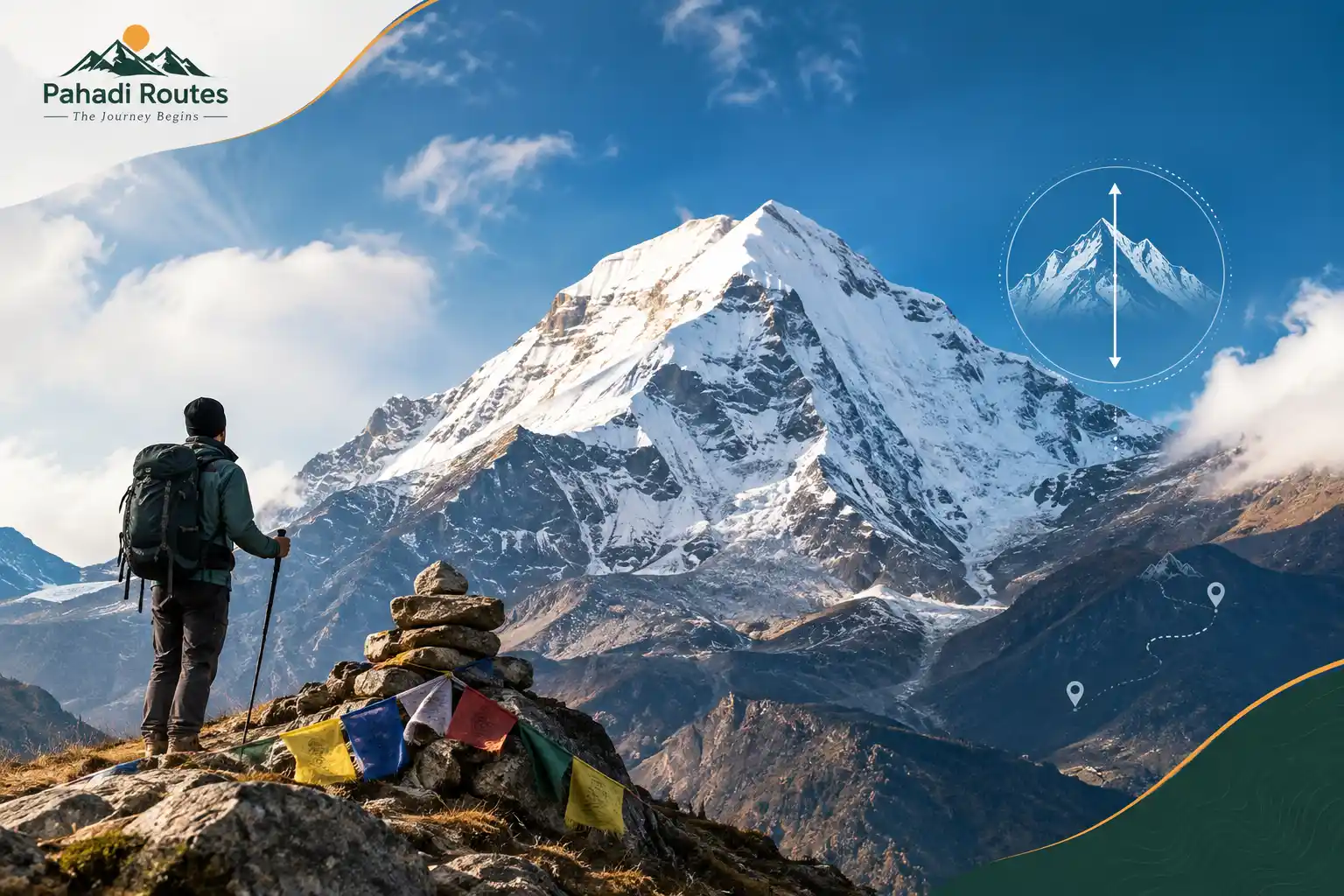
Adi Kailash height in feet is 19,505 ft, which equals 5,945 meters above sea level. This makes it one of the highest sacred peaks in the Kumaon Himalayas of Uttarakhand, standing tall in the Pithoragarh district near the India-Nepal-Tibet border.
But the number alone doesn’t tell you much unless you understand what it actually means for your trip. How high do you go during the yatra? Do you actually stand at 19,505 ft? Does this altitude affect your body? This guide answers all of that in detail.
What Is the Exact Height of Adi Kailash?
Adi Kailash stands at 5,945 meters, or 19,505 feet, at its highest point. It is located in the Dharchula sub-division of Pithoragarh district, close to the Kuti and Jolingkong region of Uttarakhand.
The mountain is also known as Chota Kailash, Shiva Kailash, or Jonglingkong Peak. It is considered the second most important peak among the Panch Kailash, a group of five sacred mountains connected with Lord Shiva across the Himalayas.
The Adi Kailash altitude puts it in the same range as several serious Himalayan peaks, even though most travelers only associate it with a spiritual yatra rather than mountaineering. The peak has actually been climbed only a handful of times, with the first confirmed ascent recorded in 2004.
How Does Adi Kailash Height Compare to Other Panch Kailash Peaks?
One thing that confuses a lot of travelers is how Adi Kailash elevation stacks up against the other Kailash peaks. Here’s a quick comparison:
| Peak | Height (meters) | Height (feet) | Location |
|---|---|---|---|
| Mount Kailash | 6,638 m | 21,778 ft | Tibet |
| Adi Kailash | 5,945 m | 19,505 ft | Uttarakhand, India |
| Kinnaur Kailash | 6,055 m | 19,865 ft | Himachal Pradesh, India |
| Manimahesh Kailash | 5,653 m | 18,547 ft | Himachal Pradesh, India |
Notice that Adi Kailash is actually lower than Kinnaur Kailash, even though it’s often assumed to be the second highest simply because it’s ranked second in spiritual importance. Height and religious ranking are two different things here, and this is where a lot of blogs get it wrong.
Why Does the Height of Adi Kailash Feel So Extreme?
A height of 19,505 ft is difficult to picture in everyday terms, so here’s some context. This is higher than the summit of Mont Blanc in the Alps, and it sits well above the altitude where most commercial aircraft cruise for short domestic routes.
For comparison, Mount Everest Base Camp sits at around 17,600 ft, which means the true summit of Adi Kailash is still higher than the point most Everest trekkers ever reach. This is why the peak commands such respect, both spiritually and physically, despite not being a technical climbing destination for regular travelers.
Do Pilgrims Actually Reach the 19,505 ft Summit?
No. This is one of the most misunderstood parts of the entire yatra. Pilgrims on the Adi Kailash Yatra do not climb to the 19,505 ft summit. The actual trek route takes you to viewpoints and base areas that sit considerably lower than the peak itself, from where you get a clear, close darshan of the mountain.
The summit remains largely untouched out of respect for its religious significance, and climbers who have attempted it in the past have deliberately stopped short of the final few meters. So when you read about “reaching Adi Kailash,” it almost always means reaching the viewing point at Jolingkong, not the summit.
Where Does the Height of Adi Kailash Come Into Play During the Yatra?
While you never touch 19,505 ft, the route itself climbs to some genuinely high altitudes. Here’s a rough sense of the elevation profile, though exact figures vary slightly depending on the source and the specific route operators use:
| Location | Approximate Altitude |
|---|---|
| Dharchula | Around 3,000 to 3,100 ft |
| Gunji village | Around 10,500 to 11,500 ft |
| Nabhidhang (Om Parvat base) | Around 14,100 to 14,600 ft |
| Jolingkong (Adi Kailash darshan point) | Around 14,500 to 15,500 ft |
These numbers are approximate because different route operators and local sources report slightly different figures depending on the exact stop and season. What matters practically is that you’re gaining well over 10,000 feet of altitude within a few days, which is a serious jump for most travellers. If you’re planning the full route in detail, it helps to go through the Adi Kailash Yatra itinerary before you commit to dates.
Have Questions?
Talk To Our Travel Team
Ask about permits, routes or travel dates — real answers, no bots.
chatChat on WhatsAppHow Does This Altitude Affect Your Body?
Anything above 8,000 ft can start to affect people differently, and by the time you’re near 14,000 to 15,000 ft, altitude sickness becomes a real possibility for a good number of travelers, regardless of fitness level. Common symptoms include headache, nausea, breathlessness, and disturbed sleep.
The risk isn’t limited to the daytime either. Temperatures at these altitudes drop sharply once the sun goes down, which adds another layer of physical stress on your body. If you want to understand what to actually expect in terms of weather, it’s worth reading up on Adi Kailash temperature patterns across different months before you pack.
Altitude sickness doesn’t always follow age or fitness. Younger, fit travelers can get hit just as hard as older pilgrims, so nobody should assume they’re automatically safe because they exercise regularly.
How Should You Prepare for This Altitude?
A few practical steps make a real difference when you’re heading into this kind of elevation:
- Spend at least one full day acclimatizing at Dharchula or Gunji before pushing higher.
- Stay well hydrated throughout the journey, since dehydration makes altitude symptoms worse.
- Avoid alcohol and heavy, oily food for the first couple of days at altitude.
- Carry warm layers even if the weather looks clear when you start out, since conditions change fast at height.
- Get a basic medical checkup before the trip if you have any existing heart, lung, or blood pressure condition.
- Consult a doctor about altitude sickness medication in advance rather than deciding on the spot.
None of this needs to be complicated, but skipping acclimatization is the single biggest mistake first-time travelers make on this route.
Common Misconceptions About Adi Kailash Height
A few mix-ups show up again and again across different blogs and forums, so it’s worth clearing them up directly.
“Adi Kailash is the second highest of the Panch Kailash peaks.” Not true by elevation. It’s ranked second in spiritual significance, but Kinnaur Kailash is actually taller in raw height.
“You trek all the way to 19,505 ft.” Also not true. You reach viewpoints at roughly 14,500 to 15,500 ft, not the summit.
“The altitude figures are fixed and identical everywhere.” In reality, different sources report slightly different numbers for base camps like Gunji and Jolingkong, since these are approximate trail elevations rather than surveyed peak heights. The peak height of 19,505 ft itself, however, is consistently documented across geographic sources.
Is Adi Kailash Suitable for Beginners Given Its Height?
This depends more on your acclimatization plan than on raw fitness. The route to the base areas is now largely motorable, which has made the yatra accessible to a much wider range of travelers, including older pilgrims, as long as they’re medically fit for high altitude travel.
That said, “motorable” doesn’t mean “easy.” You’re still gaining a lot of altitude over a short period, and the short walking sections near Jolingkong can feel harder than expected simply because of the thin air. If distance and pacing are a concern for you, having a look at the distance covered on the Adi Kailash route can give you a better idea of how much walking is involved each day.
First-time high-altitude travelers should ideally build in an extra acclimatization day rather than rushing the itinerary just to save time.
Final Thoughts
The Adi Kailash height of 19,505 ft makes it one of the most striking sacred peaks in the Indian Himalayas, but the number matters less than understanding how it actually shapes your journey. You won’t stand on the summit, but you will spend several days at altitudes high enough to demand real preparation and respect.
If you’re planning the Adi Kailash Yatra, having a clear understanding of the altitude, acclimatization requirements, and route elevation can help you prepare better for the journey. For practical assistance with itinerary planning, permits, transportation, and local arrangements, you can also consider contacting a travel company in Uttarakhand experienced in Himalayan tours and yatras. Local travel operators can help coordinate the journey according to the route, available facilities, and your planned schedule.
FAQs About Adi Kailash Height
1. What is Adi Kailash height in feet?
Adi Kailash height in feet is 19,505 ft, which is equal to 5,945 meters above sea level.
2. Is Adi Kailash taller than Mount Kailash in Tibet?
No. Mount Kailash in Tibet is taller at 6,638 meters (21,778 ft), while Adi Kailash stands at 5,945 meters (19,505 ft).
3. Do you climb to the actual summit height during the yatra?
No. Pilgrims reach viewpoints around 14,500 to 15,500 ft, not the 19,505 ft summit, which remains largely unclimbed out of respect for its sacred status.
4. What is the altitude of Jolingkong, where you get Adi Kailash darshan?
Jolingkong sits at roughly 14,500 to 15,500 ft, though exact figures vary slightly by source and route.
5. Is the Adi Kailash altitude safe for senior citizens?
Many senior citizens complete the yatra each year since much of the route is now motorable, but a prior medical checkup and proper acclimatization are strongly recommended given the altitude involved.
6 Is Adi Kailash the second highest of the Panch Kailash peaks?
Not by elevation. It ranks second in spiritual importance, but Kinnaur Kailash is actually higher in terms of raw height.

